Your tyres are the only part of your car that touches the road, so they affect how your vehicle grips, steers, brakes and rides. The good news is that basic tyre care is easy to learn and takes only a few minutes. This guide walks through simple habits that help you stay safer and get more life from your tyres.
Why Tyre Care Matters
Every time you accelerate, turn a corner or brake, the forces pass through four small patches of rubber, each roughly the size of your hand. When those patches are in good condition, the car feels stable and predictable. When they are worn, damaged or badly maintained, the car can feel vague, noisy or slow to respond.
Good tyre care also helps in other ways:
- It supports steady, controlled braking and cornering.
- It helps the tyres wear evenly, so they last longer.
- It can reduce the extra fuel or energy a car uses when tyres are not in good shape.
- It lowers the chance of a sudden problem on the road.
Check Your Tyre Pressure Regularly
Tyre pressure is the amount of air inside each tyre. Too little air and the tyre flexes too much, which can make it heat up, wear unevenly and feel soft in corners. Too much air and the tyre can feel harsh and may grip less well.
The correct pressure for your car is not a guess. It is set by the vehicle maker for your specific model and is usually shown in the owner’s manual and often on a label inside the driver’s door frame. Always use those figures rather than the number printed on the tyre itself, which is a maximum limit and not a target.
Here are some helpful habits:
- Check pressure when the tyres are cold, meaning the car has been parked for a while or driven only a short distance.
- Use a reliable gauge, either your own or one at a service station.
- Check more often before long trips or when carrying a heavy load.
- Remember that air pressure can change when the weather turns colder or warmer.
If your car has a tyre pressure warning light, treat it as a prompt to check all four tyres as soon as it is safe to do so.
Look at the Tread and the Tyre Surface
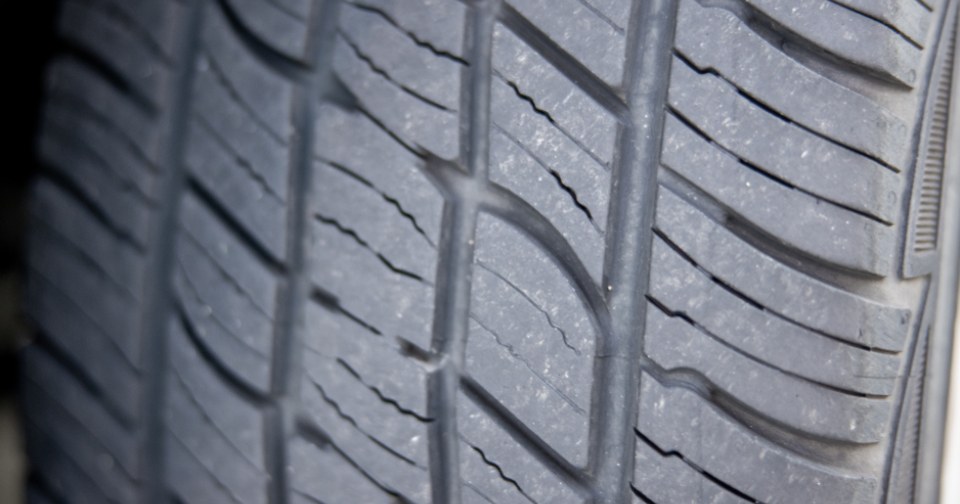
The tread is the pattern of grooves on the surface of the tyre. Those grooves move water away from the contact patch so the tyre can keep its grip on wet roads. As the tread wears down, it becomes less able to do this job.
Most tyres have small wear indicators built into the grooves. When the tread is level with those markers, the tyre is worn and needs attention. Your owner’s manual and local rules explain the legal and recommended limits for your area, so check them rather than relying on guesswork.
When you walk around your car, look for:
- Bulges or bumps on the side of the tyre, which can signal internal damage.
- Cuts, cracks or splits in the rubber.
- Nails, screws or stones stuck in the tread.
- Tread that looks worn more on one edge than the other.
If you see anything unusual, especially a bulge or deep cut, do not wait. Have a qualified tyre technician look at it promptly. Rubber that looks damaged should not be trusted at speed.
Rotation, Alignment and Balance
Even when you look after your tyres, the four of them do not wear at the same rate. Front tyres often work harder because they steer the car, and in some vehicles they also drive it. Rotating tyres means moving them to different positions on the car so the wear spreads out more evenly.
Your owner’s manual will say whether and how often rotation is recommended for your vehicle. A mechanic or tyre shop can do it as part of routine servicing.
Two other terms are worth knowing:
- Wheel alignment is the angle of the wheels in relation to the car and the road. If it is out, the tyres can wear unevenly and the car may pull to one side.
- Wheel balancing makes sure the weight is spread evenly around each wheel. If it is off, you may feel a vibration, often through the steering wheel at certain speeds.
If your car pulls, shakes or wears its tyres in an odd pattern, ask a qualified mechanic to inspect it. These are not jobs to guess at yourself, because they affect steering and safety.
Everyday Habits That Protect Your Tyres
Besides regular checks, the way you drive and park has a real effect on tyre life. A few simple habits go a long way.
- Drive smoothly. Hard braking, fast cornering and rapid acceleration wear rubber faster.
- Avoid kerbs and potholes. Hitting them can damage the tyre sidewall or knock the wheels out of alignment. Slow down and steer around them when it is safe.
- Do not overload the car. Extra weight puts more stress on the tyres. Check your manual for the recommended load limits.
- Park thoughtfully. If you can, avoid leaving the car for long periods pressed against a kerb or in strong sunlight, which can age the rubber.
Seasonal Changes and When to Call a Professional
Weather changes how tyres behave. Colder air reduces tyre pressure, so it is a good idea to check more often as temperatures drop. In very wet, icy or snowy conditions, tyre condition matters even more, because there is less grip to spare. Some drivers use tyres designed for specific seasons, and a tyre technician can explain what suits your local climate and the way you drive.
Some jobs are best left to the professionals. Contact a qualified mechanic or tyre technician if you notice any of these:
- A tyre that keeps losing air.
- A bulge, deep cut or exposed cord in the tyre.
- Strong vibration or a steering wheel that shakes.
- The car pulling to one side on a straight, level road.
- Tread worn down to the wear indicators.
Changing a wheel and lifting a car can be risky if done incorrectly. If you must change a wheel at the roadside, follow your owner’s manual carefully, park on firm level ground well away from traffic, and call for roadside help if you are not sure or if it does not feel safe.
Conclusion
Tyre care does not need special tools or deep knowledge. Check the pressure regularly using the figures from your owner’s manual, look over the tread and sidewalls when you walk around the car, and pay attention to how the car feels when you drive. Rotation, alignment and balance help the tyres wear evenly, and smooth driving makes them last longer.
Most of all, do not ignore warning signs such as bulges, vibrations or a pressure warning light. A few minutes of checking each month is a simple way to protect your safety, your comfort and your tyres.
This article is for general educational purposes only. Always follow your vehicle owner’s manual, local traffic laws and the advice of a qualified mechanic for your specific vehicle.